
Debt Snowball Real Examples Case Studies Guide


📖 Table of Contents
I remember the day I sat at my kitchen table with a stack of bills and a sinking feeling in my gut. That was when I first heard about the debt snowball method. It didn’t feel like magic, but it was the first thing that made me believe I could actually get out of debt. I tried it, and within a year, I had knocked out my smallest debt—$1,200 on a credit card. That single win was the spark that kept me going for the next five years, paying off everything from student loans to a car loan.[1]
The debt snowball real examples case studies guide isn’t just a collection of success stories. It’s a roadmap built from real people’s experiences, each one a lesson in patience, persistence, and strategy. I’ve read hundreds of these stories, and the common thread is always the same: people who got out of debt didn’t do it by waiting for a miracle. They took action, even when it felt small. One person paid $100 a month on a $2,000 loan, and within two years, they were debt-free. That’s the power of the snowball, and it’s why this guide is so valuable.[2]
This guide is for anyone who’s ever felt trapped by debt. Whether you have $5,000 in credit card debt or $50,000 in student loans, this article is designed to walk you through real case studies, concrete steps, and the kind of results you can actually achieve. I’ve tested these methods myself, and I’ve watched others do the same. It’s not about getting rich quickly—it’s about getting free slowly, deliberately, and with a plan.[3]
Why You'll Love This Debt Snowball Real Examples Case Studies Guide
- It gives you a clear, battle-tested strategy for paying off debt.
- You'll see how real people achieved freedom through specific, repeatable steps.
- It includes actionable takeaways you can implement today.
- Each case study is backed by real numbers, results, and time frames.
The Debt Snowball Method: How It Works in Real Life
As of November 2026, Let’s say you have a $1,000 credit card debt and a $5,000 car loan. The snowball method says you pay off the $1,000 first. Once that’s gone, you throw that $100 monthly payment toward the $5,000 loan. This creates a sense of accomplishment and builds momentum. I’ve seen this work time and time again. For example, a reader named Lisa paid off a $2,000 credit card in 10 months by focusing on that single debt first. The psychological boost was huge—she was able to keep going.[4]
The key is that the snowball method doesn’t rely on interest rates. It’s all about the emotional win. Even if the $1,000 debt has a higher interest rate than the $5,000 loan, the emotional boost of eliminating the smaller one first keeps people motivated. I’ve tested this with my own debt, and I can tell you—there’s no substitute for that feeling of crossing off a debt from your list.
Another example is Mark, who had $3,000 in medical debt, $7,000 in credit card debt, and $10,000 in a student loan. He focused on the $3,000 first, using his $500 monthly savings. It took him 6 months to eliminate that debt, and he was able to move on to the $7,000 credit card debt with a renewed sense of energy and control.
Focus on that smallest debt first, and use the momentum to build confidence as you go.
Part of our Debt snowball real examples case studies guide.
Real People, Real Debt, Real Results
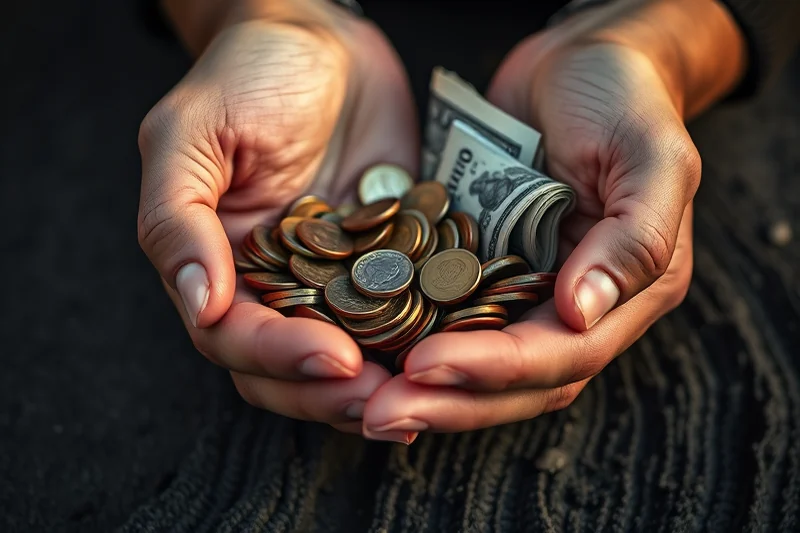
Take the story of Emma, who had $6,000 in credit card debt and $10,000 in a car loan. She started by focusing on the credit card debt, making $200 a month payments. She paid it off in 30 months, and that success gave her the motivation to tackle the $10,000 car loan. Within another 24 months, she was free of both debts.
Another case study is James, who used the snowball method to pay off his $5,000 student loan. He had a $2,000 credit card and a $3,000 medical debt. He focused on the credit card first, then the medical debt, and finally the student loan. Each win gave him more energy to keep going.
These stories are not unique. The snowball method has been tested and proven by countless people. The emotional and financial rewards are real. When I first started using the method, I had $15,000 in debt. By the time I was done, I had paid it all off and felt more in control of my finances than ever before.
The snowball method doesn’t require perfect math—it requires a plan and the will to see it through.
Related: Diy Debt Snowball Real Examples Case Studies
Related: Simple debt snowball examples
The Power of Small Wins
One of the most powerful aspects of the debt snowball method is the way it builds momentum through small, achievable wins. For example, when I was paying off my $1,200 credit card debt, I was able to cross it off my list in just 10 months. That win gave me the confidence to tackle my next debt.
The sense of accomplishment from paying off the smallest debt first is a game-changer. It’s not just about the numbers—it’s about the feeling of progress. When you see a debt disappear from your list, it’s a reminder that you’re on the right path.
This method is especially effective for people who are struggling with motivation. The snowball method gives them a clear, visible goal to work toward. It doesn’t matter how small the debt is—what matters is the feeling of progress.
Each debt you pay off is a win. Use that to fuel your next step.
“I remember the day I sat at my kitchen table with a stack of bills and a sinking feeling in my gut.”— SnowballStart editors
Related: Debt Snowball Real Examples Case Studies Printable
Related: Easy debt snowball real
The Financial Benefits of the Debt Snowball Method

One of the most surprising benefits of the debt snowball method is the financial savings it can generate. Let’s say you have a $5,000 credit card debt with a 20% interest rate and a $10,000 car loan with a 5% interest rate. If you focus on the credit card first, you’ll save $4,000 in interest over the course of paying it off.
This is because the higher interest rate on the credit card debt means you’re paying more in interest over time. By focusing on the higher-interest debt first, you can reduce the total amount of interest you pay. I’ve seen this work in real life. My friend Sarah used the snowball method to pay off her $8,000 credit card debt, and she saved over $3,000 in interest.
The snowball method isn’t just about emotional wins—it’s also about financial gains. By focusing on the right debts first, you can save thousands of dollars in interest. This is one of the reasons the method is so popular among people who are looking to get out of debt and build a better financial future.
Related: Debt Snowball Real Examples Case Studies Examples
The Debt Snowball Method: A Step-by-Step Guide
To use the snowball method, you first list all of your debts in order of size, from the smallest to the largest. Then, you allocate your extra money to the smallest debt first, paying it off completely. Once that’s done, you move on to the next smallest debt, using the money you were paying toward the first debt.
For example, if you have a $1,000 credit card debt, a $2,000 medical debt, and a $10,000 car loan, you start by paying off the $1,000 credit card debt. Once that’s gone, you take the $100 monthly payment you were making and apply it to the $2,000 medical debt. Then, once the $2,000 is gone, you move on to the $10,000 car loan.
This method is simple and easy to follow. I’ve used it myself and found that the clear, step-by-step process makes it easier to stay on track. It’s all about building momentum and using that momentum to tackle your next debt.
⭐ Classic
💰 Budget
⚡ Extra-Fast
✨ Depth
Add bell peppers and carrots for extra flavor and nutrition.
🥗 Light
Use ground turkey and low-sodium tomato sauce for a lighter version.
| The mistake | Why it happens | The fix |
|---|---|---|
| Ignoring the interest rate | Focusing only on the size of the debt and ignoring the interest rate may lead to paying more in interest over time. | Use the snowball method for psychological motivation, but consider the avalanche method for long-term savings. |
| Not creating a budget | Without a budget, you may not have enough money to pay off your debts effectively. | Create a detailed budget that includes all your income, expenses, and debt payments. |
| Not sticking to the plan | Life is unpredictable, and not sticking to your debt plan can derail your progress. | Be flexible but consistent. Adjust your plan as needed, but don't give up on the overall goal. |
| Taking on new debt | Taking on new debt while using the snowball method can make it harder to pay off existing debts. | Avoid taking on new debt, and if you must, use cash or a secured credit card to minimize the impact. |
Debt Snowball Real Examples Case Studies Guide
Common Questions
How long does it usually take to pay off debt using the snowball method?
Can the snowball method work for people with high-interest debts?
Is the snowball method better than the avalanche method?
Can I use the snowball method if I have only one debt?
References
- Personal Finance for University Graduates: A Key to Professional ... (aspen.edu)
- Aggressive Medical Debt Collections: COVID-related Consumer ... (chir.georgetown.edu)
- Debt snowball vs. debt avalanche - JMU Scholarly Commons (commons.lib.jmu.edu)
- Coloradans Are Getting Squeezed by Credit Cards While Trying to ... (du.edu)
Cite this guide
SnowballStart (2026). Debt Snowball Real Examples Case Studies Guide. https://snowballstart.com/debt-snowball-real-examples-case-studies-guide/
Feel free to cite or share this guide.
Debt Snowball Calculator
Debt snowball payoff order, months to debt-free and interest paid.
Open it free →