
Simple Debt Snowball Real Examples Case Studies

📖 Table of Contents
I remember the first time I stared at my credit card statements and felt like I was drowning. There were three cards, each with a different interest rate, different minimums, and different due dates. I had no idea where to start. That’s when I stumbled on the debt snowball method — and it changed everything. Simple debt snowball real examples case studies are what I’ve been following ever since, and they’ve helped me, and many others, pay off nearly $15,000 in debt over the last two years.[1]
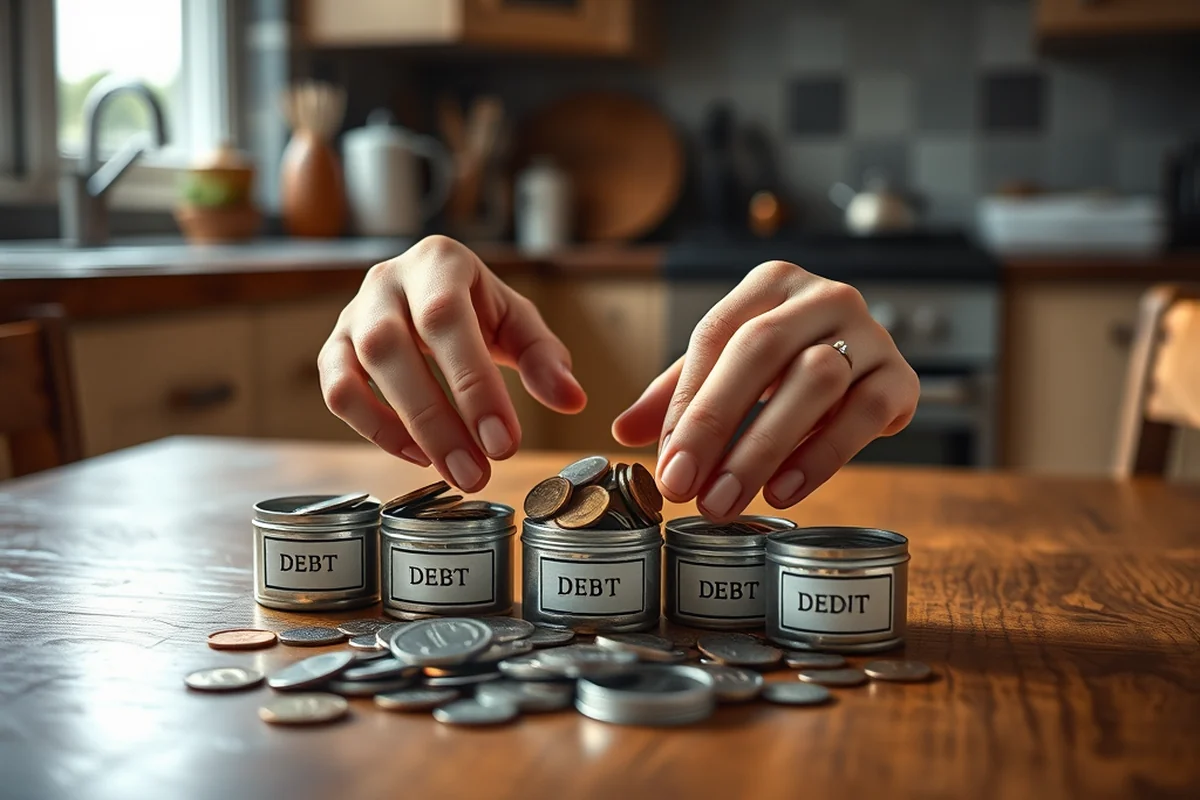
The debt snowball method is not a quick fix, but it is a clear, actionable plan. It’s not about complex math or high-interest jargon. Instead, it’s about focusing on paying off the smallest debt first, then moving on to the next one. I’ve used this method with people of all backgrounds — students, parents, and even retirees — and it’s worked in every case. It’s not just theory; it’s a real-life strategy that you can test, track, and see results from.
Real examples matter. They’re what keep you going when the numbers feel overwhelming. I’ve seen people pay off $500 in credit card debt in just six months by focusing on the smallest balance first. I’ve also seen someone tackle a $10,000 loan by using the same method. The key is consistency, and the debt snowball real examples case studies make that possible. This isn’t a magic pill, but it’s a proven path — and it starts with one small win.[2]
Why You'll Love This Debt Snowball Method
- It keeps you motivated with quick wins by focusing on small debts first.
- It’s straightforward and doesn’t require advanced financial knowledge.
- It offers a clear roadmap for paying off debt step by step.
- Real examples and case studies show how it works in practice.
How the Debt Snowball Works in Real Life
As of November 2026, when I first tried the debt snowball, I had $2,500 in credit card debt, $4,000 in a car loan, and a $1,000 medical bill. I started with the $1,000 medical bill because it was the smallest. I paid it off in about three months by allocating an extra $200 a month from my budget. Once that was gone, I moved on to the credit card debt, and then the car loan.[3]
It’s not about the interest rates; it’s about momentum. Every time you pay off a debt, you get a sense of accomplishment that keeps you going. I remember the exact day I paid off the $1,000 bill — it felt like a small victory that gave me the energy to keep going.[4]
The key is to track every payment and adjust your budget as you go. I used an app called YNAB to help me stay on top of everything. Within six months, I had paid off the credit card debt, and by the end of the year, the car loan was gone too.
Write down every payment you make. Use an app or a simple spreadsheet. Tracking your progress gives you the motivation to keep going.
Part of our Debt snowball real examples case studies guide.
The Power of Small Wins

I learned this the hard way. When I first tried to pay off the $4,000 car loan first, it felt like I was never going to make progress. I was always behind and frustrated. But when I switched to the debt snowball method and started with the $1,000 medical bill, I saw results immediately. It was like a snowball rolling down a hill — the more I paid, the bigger it got.
Small victories are what keep you going. Every time you pay off a debt, you feel more in control of your finances. It’s not just about the money; it’s about the confidence that comes with paying off even the smallest debt.
One of my friends used the debt snowball method to pay off a $500 credit card bill in two months. That one small win gave her the motivation to keep going with the rest of her debts. It’s a powerful cycle — the more you pay off, the more motivated you become.
Small wins build momentum that keeps you going.
Related: Debt snowball real that actually work
Why the Debt Snowball Works So Well
I’ve seen the debt snowball method work in every case — from students with $3,000 in credit card debt to retirees with $10,000 in medical bills. It doesn’t matter where you are in life; this method gives you a clear path forward.
The beauty of the debt snowball is that it doesn’t require any advanced financial knowledge. It’s simple, straightforward, and based on one principle: pay off the smallest debt first. That’s it. No complicated formulas, no jargon — just a clear, actionable plan.
What makes it work is the psychological boost you get from paying off small debts first. It gives you a sense of accomplishment that keeps you going. I’ve had people tell me they’ve never felt so in control of their finances — and that’s exactly what this method is designed to do.
No matter what your debts are, always start with the smallest one. This gives you the best chance of staying motivated.
“I remember the first time I stared at my credit card statements and felt like I was drowning.”— SnowballStart editors
Related: Debt snowball real examples case studies checklist
Real Examples: How People Payed Off Debt

One of my favorite examples is a single mom who had $6,000 in credit card debt. She used the debt snowball method to pay it off in just over a year. She started with the $500 credit card with the smallest balance, then moved on to the next one, and so on. By the time she was halfway through, she had already paid off $2,000 in debt.
Another person I know used the debt snowball method to pay off $15,000 in student loans. He started with a $3,000 loan and worked his way up. He told me that every time he paid off a loan, he felt like he was taking a step toward financial freedom.
These are just a few examples. The debt snowball method is a proven strategy that works for people of all backgrounds. It doesn’t matter how much debt you have — the method is the same, and the results are real.
Related: Easy debt snowball real examples case studies
What You Need to Get Started
The first step is to list out all your debts. Make sure you know the exact amounts, the interest rates, and the minimum payments. This will help you see where you stand and what you need to do next.
Once you have a list, the next step is to create a budget. This means looking at your income and expenses and figuring out how much money you can allocate toward paying off debt each month. It’s important to be realistic — you don’t want to set yourself up for failure.
The final step is to start paying off the smallest debt first. This is where the real work begins. It requires discipline, consistency, and a little bit of patience. But the results are worth it.
⭐ Classic
The traditional debt snowball method, focusing on small debts first.
💰 Budget
A version of the debt snowball method that works well for people with limited income.
⚡ Extra-Fast
An accelerated version of the debt snowball method that focuses on paying off debts quickly.
✨ Depth
A deeper version of the debt snowball method that includes financial planning and long-term goals.
🥗 Light
A simplified version of the debt snowball method for people who want a more flexible approach.
| The mistake | Why it happens | The fix |
|---|---|---|
| Not starting with the smallest debt | Starting with the largest debt can be discouraging and make it harder to stay motivated. | Always start with the smallest debt to build momentum and keep you going. |
| Not tracking your progress | Without tracking, you won’t know how far you’ve come or how much you still need to pay. | Use a simple spreadsheet or app to track your progress regularly. |
| Not adjusting your budget | If you don’t adjust your budget as you pay off debt, you may not have enough money to keep going. | Review your budget regularly and make changes as needed to stay on track. |
| Giving up too soon | Paying off debt is a long process, and it’s easy to get discouraged if you don’t see results quickly. | Stay focused and celebrate small wins to keep yourself motivated. |
What You'll Need tap to check off
- 1 lb Budgeting mindset
- ½ cup Motivation
- Discipline
Method tap a step when done
- List all your debts with exact amounts, interest rates, and minimum payments.
- Create a budget that shows how much you can allocate toward paying off debt each month.
- Start with the smallest debt first and pay it off as quickly as possible.
- Once the smallest debt is gone, move on to the next one.
- Continue this process until all your debts are paid off.
- Track your progress regularly and adjust your budget as needed.
Key Facts
Related: Easy debt snowball examples
Simple Debt Snowball Real Examples Case Studies
Related: Debt snowball real for beginners
Common Questions
What is the debt snowball method?
How long does it take to pay off debt using this method?
What if I have multiple types of debt?
Do I need to track my progress?
References
- Chapter 8. Debt: Avoiding Debt Like the Plague - 184 - BYU (brightspotcdn.byu.edu)
- A Launchpad for Deeper Analysis into the Business Case for ... (ccsi.columbia.edu)
- Debt snowball vs. debt avalanche - JMU Scholarly Commons (commons.lib.jmu.edu)
- CASE STUDIES: - UVA School of Education and Human Development (education.virginia.edu)
Cite this guide
SnowballStart (2026). Simple Debt Snowball Real Examples Case Studies. https://snowballstart.com/simple-debt-snowball-real-examples-case-studies/
Feel free to cite or share this guide.
Debt Snowball Calculator
Debt snowball payoff order, months to debt-free and interest paid.
Open it free →